

Ad: this article contains affiliate links. If you buy through them, we earn a commission at no extra cost to you. Our reviews are based on research into manufacturer specifications, retailer information and published sources; we have not tested every product ourselves. Prices and stock change often, so check the retailer before you buy.
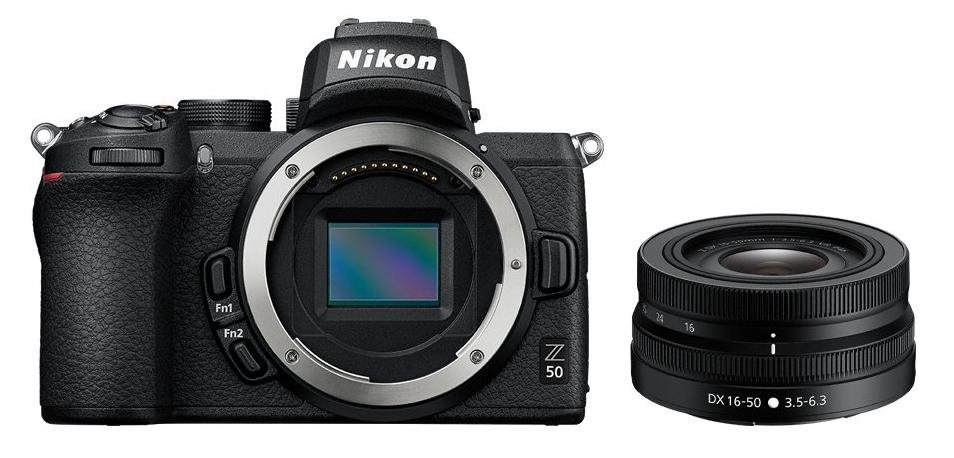
For many aspiring photographers, the transition from smartphone photography to a dedicated camera can be daunting. The challenge lies in finding a device that balances portability with performance, allowing for high-quality images without the bulk of traditional DSLRs. The Nikon Z 50 addresses this need by offering a compact mirrorless design that does not sacrifice functionality or image quality.
Equipped with a 20.9 MP DX-format sensor, the Z 50 is positioned as an entry-level mirrorless camera. It aims to provide users with the tools necessary to capture vibrant, detailed images in a variety of settings. Photographers can enjoy advanced autofocus capabilities and a broad ISO range, making this camera suitable for both low-light conditions and bright environments alike.
This review will explore the Nikon Z 50 in detail, examining its specifications, usability, and performance in real-world scenarios. By comparing it to competitors like the Canon EOS M50 and Sony Alpha a6400, we will highlight its strengths and weaknesses, providing a comprehensive overview for potential buyers. Understanding the Z 50’s capabilities will help you determine if it meets your photographic needs.
Pros
- Lightweight and compact design makes it easy to carry
- 20.9 MP sensor captures detailed images with vibrant colors
- Fast Hybrid-AF system covers 90% of the frame for precise focusing
- High ISO range (100-51200) enables excellent low-light performance
- 4K video recording and in-camera time-lapse capabilities
- Intelligent Eye-Detection AF for improved portrait photography
- User-friendly touchscreen with tilting functionality for creative angles
Cons
- Limited battery life may require carrying extras for extended shoots
- No in-body image stabilization, which may affect handheld shooting
- Some users may find the menu system initially complex
- Lack of dual card slots may limit storage options in professional settings
In Depth
Image Quality and Sensor Performance
The Nikon Z 50 features a 20.9 MP DX-format sensor, which is designed to capture images with remarkable detail and vibrant colors. This sensor size is advantageous for aspiring photographers, as it strikes a balance between portability and image quality, allowing for larger prints and more cropping flexibility compared to smartphone sensors. In practical use, this means that landscapes, portraits, and street photography can all benefit from the enhanced resolution and color depth provided by the Z 50.
Moreover, the camera’s ISO range of 100-51200 ensures excellent performance in low-light conditions. This broad range allows users to shoot in darker environments without introducing excessive noise, which is often a concern with lower-end models. Whether capturing cityscapes at night or indoor events, the Z 50’s sensor can adapt, making it a versatile choice for various shooting scenarios.
Autofocus System
The Z 50 is equipped with a Fast Hybrid-AF system that covers 90% of the frame, providing precise focusing capabilities. This feature is particularly beneficial for capturing fast-moving subjects or spontaneous moments, as the camera can quickly lock onto the subject even in challenging conditions. The Intelligent Eye-Detection AF further enhances portrait photography, ensuring that subjects’ eyes are in sharp focus, which is crucial for professional-looking results.
In everyday use, the autofocus system’s speed and accuracy can significantly impact the shooting experience. For example, during family gatherings or events, the ability to quickly focus on a moving child or a fleeting expression can make the difference between a missed shot and a cherished memory. The Z 50’s autofocus performance stands out in its class, making it an appealing option for amateur photographers.
Video Capabilities
In addition to still photography, the Nikon Z 50 offers 4K video recording and in-camera time-lapse capabilities. This feature set makes it an attractive option for content creators who require a lightweight camera for vlogging or video production. The ability to shoot in 4K allows for high-resolution video content, which is essential for platforms like YouTube and social media.
For users looking to create engaging video content, the Z 50’s video features are complemented by its user-friendly touchscreen, which tilts for creative angles. This functionality is particularly useful for self-recording, allowing users to frame their shots easily while ensuring they are in focus. However, those seeking advanced video features may need to consider higher-end models, as the Z 50’s capabilities, while impressive for its category, may not satisfy all professional videographers.
Limitations and Battery Life
While the Nikon Z 50 excels in many areas, it does have some limitations that potential buyers should consider. One notable drawback is its limited battery life, which may require users to carry extra batteries for extended shooting sessions. According to the manufacturer, the Z 50 can capture approximately 300 shots on a single charge, which may not suffice for all-day events or travel without a power source.
Additionally, the absence of in-body image stabilization (IBIS) could affect handheld shooting, particularly in low-light situations or when using longer lenses. Users may need to invest in stabilized lenses or consider using a tripod to mitigate this issue. These limitations are important to weigh against the camera’s advantages, especially for those who plan to use it for professional work.
Usability and User Interface
The Nikon Z 50 is designed with usability in mind, featuring a user-friendly touchscreen with tilting functionality. This allows for easy navigation through menus and settings, which is especially beneficial for those who may be new to mirrorless cameras. However, some users have reported that the menu system can initially feel complex, requiring a learning curve to fully utilize the camera’s capabilities.
Familiarizing oneself with the camera’s settings before important shoots can enhance the overall experience. The SnapBridge app provides additional functionality by allowing for easy sharing and remote shooting, which is an attractive feature for tech-savvy users. However, those who prefer a more intuitive interface may find the initial setup and navigation somewhat daunting.
Who It’s For
Amateur photographers looking to upgrade from smartphone photography
Content creators who need a lightweight camera for vlogging and video production
Travelers wanting a compact camera with excellent image quality for capturing memories
Use Cases
Capturing Family Moments
The Nikon Z 50 is ideal for family gatherings where capturing spontaneous moments is essential. Its fast autofocus and compact design make it easy to grab and shoot, ensuring that fleeting expressions and actions are not missed.
Travel Photography
For travelers seeking to document their adventures without the bulk of a DSLR, the Z 50 offers a lightweight solution. Its impressive image quality and low-light capabilities make it suitable for various environments, from bustling cities to serene landscapes.
Vlogging and Content Creation
Content creators will appreciate the Z 50’s 4K video capabilities and user-friendly touchscreen. Whether filming travel vlogs or tutorials, the camera’s features cater to the needs of modern digital storytellers.
Also consider
How We Researched This
The review process involved a thorough comparison of the Nikon Z 50 with other mirrorless cameras in its class, including the Canon EOS M50 and Sony Alpha a6400. Key specifications such as sensor size, autofocus capabilities, and ISO performance were scrutinized to assess how the Z 50 holds up against its competitors.
We evaluated usability features, including the electronic viewfinder and touchscreen functionality, to determine the overall user experience. Real-world scenarios were considered, focusing on low-light shooting and quick action photography to understand how the Z 50 performs in diverse conditions. Additionally, user feedback from photography communities was taken into account to gauge satisfaction and identify common issues.
Frequently Asked Questions
What is included in the box with the Nikon Z 50?
Typically, the box includes the camera body, a NIKKOR Z lens, a battery, a charger, and user manuals. However, it is advisable to check with the retailer for specific inclusions.
How does the battery life compare to other cameras?
The Z 50 has a battery life of approximately 300 shots, which is on the lower end compared to some competitors. Users planning extended shoots may need to carry extra batteries.
Is the Z 50 suitable for professional use?
While the Z 50 is a capable camera for amateur photographers and content creators, professionals may find limitations such as the lack of dual card slots and in-body stabilization. It is best suited for enthusiasts rather than full-time professionals.
Our Verdict
The Nikon Z 50 is a solid choice for amateur photographers and content creators seeking a compact camera with excellent image quality and video capabilities. However, those who require extended battery life or advanced features may need to explore higher-end models.

