
Ad: this article contains affiliate links. If you buy through them, we earn a commission at no extra cost to you. Our reviews are based on research into manufacturer specifications, retailer information and published sources; we have not tested every product ourselves. Prices and stock change often, so check the retailer before you buy.
Virtual reality content creation and wildlife photography demand specific tools to achieve the desired results. The Canon RF 5.2mm f/2.8 L Dual Fisheye 3D VR Lens and the Nikon Z 100-400mm f/4.5-5.6 VR S Lens cater to these distinct needs, offering features tailored to their respective fields.
The Canon lens, with its dual fisheye design, is built for immersive VR experiences, while the Nikon lens provides a long telephoto reach for capturing distant subjects in sports or wildlife environments. Understanding the strengths and limitations of each lens can help potential buyers make an informed decision based on their specific photographic requirements.
Specs Side by Side
| Canon RF 5.2mm f/2.8 L Dual Fisheye | Nikon Z 100-400mm f/4.5-5.6 VR S | |
|---|---|---|
| Brand | Canon | Nikon |
| Focal Length | 5.2mm | 100-400mm |
| Aperture Range | f/2.8 to f/16 | f/4.5-5.6 |
| Lens Type | Dual Fisheye 3D VR | Super-Telephoto Zoom |
| Compatibility | EOS R5 | Nikon Z Mount |
| Delivery Weight | 1 kg | 1 kg |
| Condition | New | New |
Design and Build
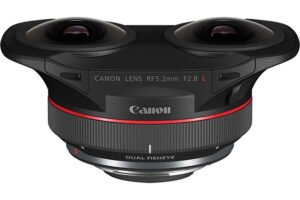
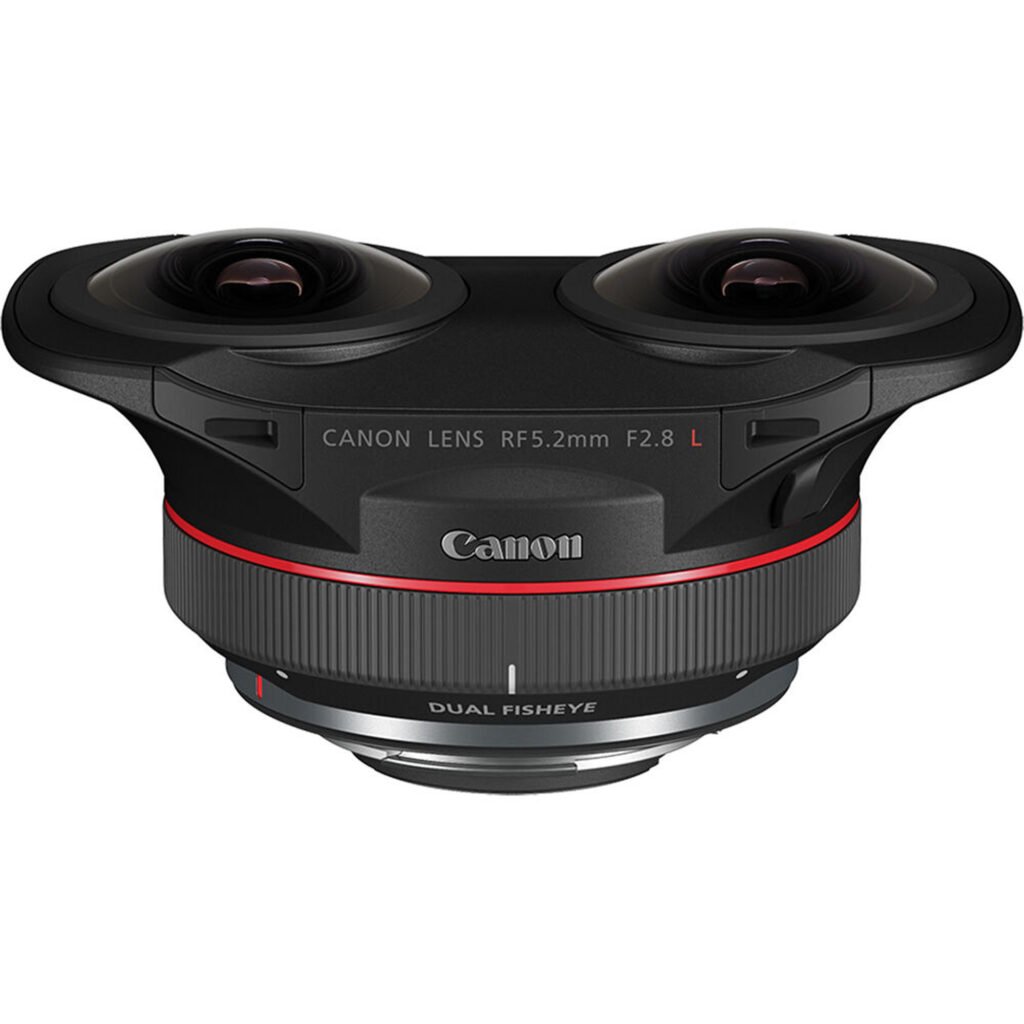
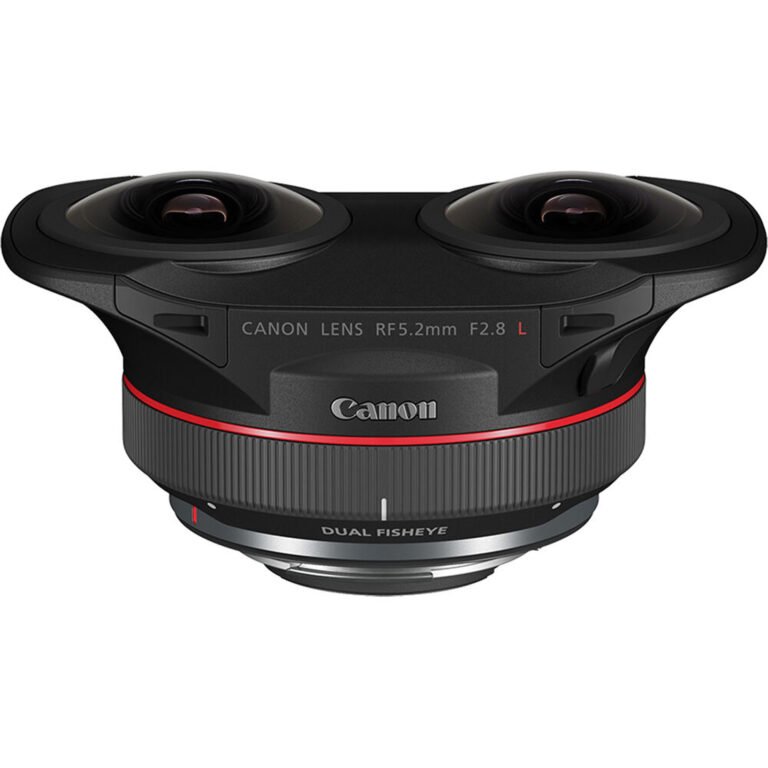
The Canon RF 5.2mm lens is uniquely crafted for VR content creators, featuring a dual fisheye design that enables 180° stereoscopic imagery on a single image sensor. This design simplifies the workflow by eliminating the need for multiple video files and their subsequent stitching. This makes it particularly advantageous for VR enthusiasts who need an efficient, streamlined process.
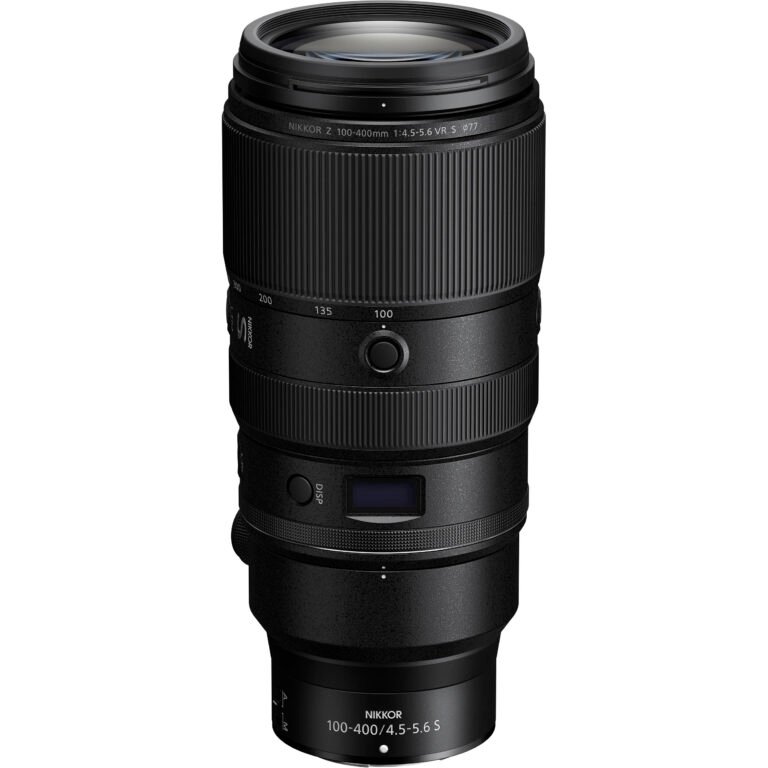
In contrast, the Nikon Z 100-400mm lens offers a super-telephoto range suitable for wildlife and sports photographers who require long-distance reach in a portable package. Its Inner Balance technology maintains stability during tracking, while the lens’s lightweight build makes it ideal for travel and dynamic shooting situations. The Nikon lens is better suited for those prioritising versatility and portability.
Image Quality
The Canon RF 5.2mm lens excels in delivering immersive VR experiences with its ability to capture ultra-sharp 180° VR content. The dual fisheye lenses combine to produce high-resolution imagery, crucial for creating vivid and engaging VR scenes. This lens is perfect for creatives who want to engage their audience with detailed and panoramic virtual environments.
Meanwhile, the Nikon Z 100-400mm lens incorporates advanced optical elements, including Super ED and ED glass, to minimise chromatic aberrations and enhance colour accuracy. The Nano Crystal and ARNEO coatings further improve contrast by reducing ghosting and flare. This makes the Nikon lens ideal for photographers who require precise colour reproduction and clarity, especially in challenging lighting conditions.
Focusing and Performance
For VR content creators, the Canon RF 5.2mm lens offers a straightforward transition from traditional shooting to stereoscopic 3D capture, facilitated by its compatibility with the EOS R5. This flexibility allows users to switch lenses effortlessly, enhancing their creative workflow.
On the other hand, the Nikon Z 100-400mm lens features a multi-focus system with stepping motors that provide fast and quiet autofocus, suitable for both stills and video. The internal focusing design maintains the lens’s length during use, which is beneficial for maintaining balance and stability, especially when using gimbal heads. This makes the Nikon lens more suited for photographers who need reliable and quiet focusing in fast-paced environments.
Compatibility and Usability
The Canon RF 5.2mm lens is specifically designed for use with the EOS R5, requiring firmware version 1.5.0 or higher for optimal performance. It also necessitates Canon’s VR software solutions for creating immersive 3D content. This makes it a specialised tool for those deeply invested in the Canon ecosystem and VR content creation.
Conversely, the Nikon Z 100-400mm lens is compatible with the Nikon Z mount, making it versatile for users within the Nikon mirrorless system. Its portability and broad focal range make it a practical choice for photographers who need a single lens to cover various scenarios, from wildlife to sports.
Target Audience
The Canon RF 5.2mm lens targets VR creators who need a high-quality, streamlined solution for capturing stereoscopic 3D content.
In contrast, the Nikon Z 100-400mm lens is designed for photographers who require super-telephoto capabilities in a compact form. Its advanced optics and versatile focal range cater to sports and wildlife photographers seeking a reliable lens for capturing distant subjects with precision and clarity.
Choose the Canon RF 5.2mm f/2.8 L Dual Fisheye if…
- You are focused on VR content creation
- You own a Canon EOS R5 camera
- You need a lens that simplifies the VR workflow
Read our full review of the Canon RF 5.2mm f/2.8 L Dual Fisheye.
Choose the Nikon Z 100-400mm f/4.5-5.6 VR S if…
- You need a versatile lens for sports and wildlife photography
- You own a Nikon Z camera
- You require advanced optics for clear and accurate colour reproduction
Read our full review of the Nikon Z 100-400mm f/4.5-5.6 VR S.
Frequently Asked Questions
Can the Canon RF 5.2mm lens be used with other cameras?
Currently, the Canon RF 5.2mm lens is specifically compatible with the EOS R5. Other cameras may not support its unique dual fisheye design or VR capabilities.
Is the Nikon Z 100-400mm lens suitable for video recording?
Yes, the Nikon Z 100-400mm lens is suitable for video recording. It features smooth and quiet autofocus, which is ideal for capturing video without intrusive noise.
What are the main uses for the Canon RF 5.2mm lens?
The Canon RF 5.2mm lens is primarily used for capturing immersive 3D VR content. It is suitable for applications in entertainment, tourism, training, education, and real estate.
Our Verdict
For most buyers, the Nikon Z 100-400mm lens is the better choice due to its versatility, advanced optics, and suitability for a wide range of photographic applications. It is particularly advantageous for those in sports and wildlife photography. However, for VR content creators who are focused on producing immersive experiences, the Canon RF 5.2mm lens is the ideal option, offering a unique dual fisheye design that simplifies the VR workflow.