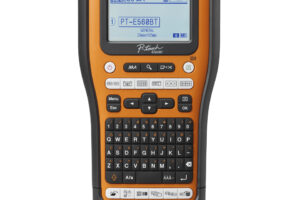


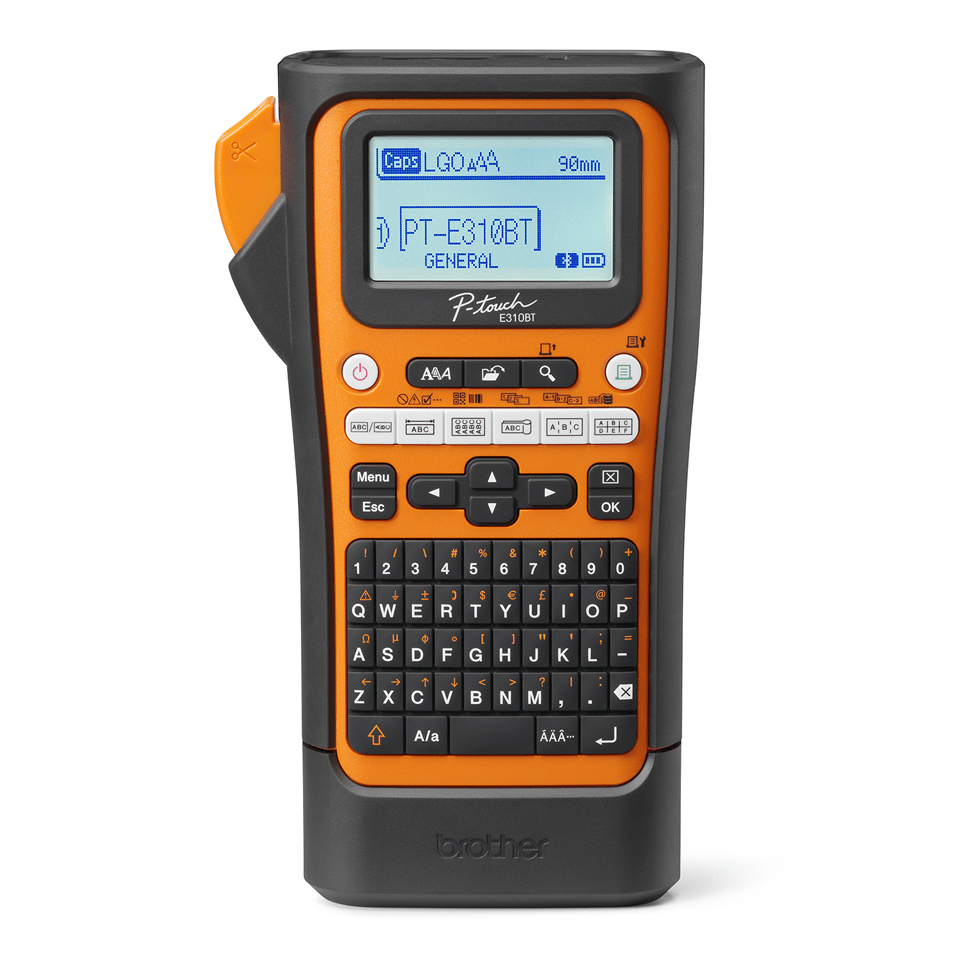
In professional settings, clear and durable labeling is crucial for safety and organization. Whether you’re managing electrical installations, labeling AV equipment, or organizing cables, the Brother PT-E310BTVP label printer offers a robust solution that meets industry standards.
With its thermal transfer printing technology and a resolution of 180 x 180 DPI, this label printer ensures that your labels are not only legible but also resistant to various environmental factors. The integrated Bluetooth capability allows users to connect easily with smartphones and tablets, enhancing flexibility in label creation and printing.
Pros
- Thermal transfer printing provides durable labels that resist water, chemicals, and abrasion.
- Integrated Bluetooth enables wireless printing from smartphones and tablets.
- Standalone mode with a built-in QWERTY keyboard allows for quick label creation without a computer.
- Compatible with Brother’s Pro Tapes, designed for various environments and applications.
- Large display for easy navigation and label design.
Cons
- Limited to a maximum print width of 20 mm, which may not suit all labeling needs.
- The 180 x 180 DPI resolution may not be sufficient for very detailed graphics or small text.
- Standalone functionality may lack advanced features available in PC software.
- Bluetooth connectivity may not support all devices or operating systems.
Who It’s For
Electricians who need to label circuits and installations clearly and durably.
Event organizers looking to label AV equipment and cables for easy setup and identification.
Facilities managers who require consistent labeling for maintenance and safety signage.
How We Evaluated
To assess the Brother PT-E310BTVP, we compared it with other label printers in the same category, focusing on features like printing technology, ease of use, and durability of labels. Competing models included the DYMO LabelWriter and Epson LabelWorks series, which offer various functionalities but may not match the specific durability requirements of industrial environments.
We also evaluated the label printer’s compatibility with different tape types and its performance in both standalone and connected modes. The ability to print wirelessly and the range of available tapes were significant factors in our evaluation, considering the diverse use cases for labeling in professional settings.
Affiliate Disclosure: This article contains affiliate links. When you purchase through links on our site, we may earn a commission at no additional cost to you. Our editorial team independently selects products based on research and testing. We only recommend products we genuinely believe in.