
Ad: this article contains affiliate links. If you buy through them, we earn a commission at no extra cost to you. Our reviews are based on research into manufacturer specifications, retailer information and published sources; we have not tested every product ourselves. Prices and stock change often, so check the retailer before you buy.
As data-intensive applications become more commonplace, the demand for high-performance storage solutions has surged. Users ranging from gamers to enterprise-level data centers require reliable, fast, and efficient storage options to manage vast amounts of data. The Samsung PM1733 SSD emerges as a compelling choice, leveraging PCIe Gen 4 technology to deliver superior performance not seen in previous generations of SSDs.
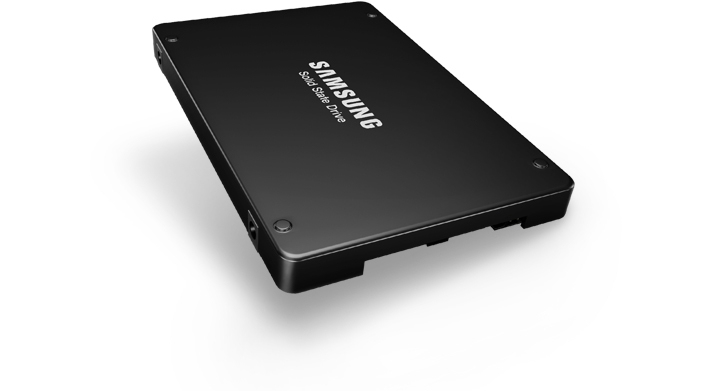
The Samsung PM1733 is a 2.5-inch NVMe SSD that offers an impressive capacity of 7.68 TB, making it suitable for a variety of uses, from gaming to professional video editing and large-scale data management. With multiple capacity options available—ranging from 0.8 TB to 30.72 TB—the PM1733 is designed to meet the diverse needs of its user base. Its robust endurance ratings indicate that it can handle intensive workloads reliably, which is crucial for both consumer and enterprise applications.
In this review, we will explore the key specifications of the Samsung PM1733, its performance metrics, and how it stands up against its competitors in the PCIe Gen 4 SSD category. By understanding its capabilities and limitations, potential buyers can make informed decisions about whether this SSD aligns with their storage needs.
Pros
- High throughput capabilities due to PCIe Gen 4 technology
- Multiple storage capacities available to suit various needs
- Endurance ratings of one or three drive writes per day over five years
- Two form factors (2.5-inch and HHHL) for versatile installation options
- Ideal for both consumer and enterprise applications
Cons
- Higher price point compared to SATA SSDs
- May require compatible hardware to fully utilize PCIe Gen 4 speeds
- Overkill for casual users with minimal storage needs
In Depth
High Throughput with PCIe Gen 4 Technology
The Samsung PM1733 utilizes PCIe Gen 4 technology, which significantly enhances its data transfer speeds compared to older PCIe generations. This means users can expect faster read and write speeds that are essential for high-demand applications such as gaming and content creation. The improved throughput allows for quicker loading times and more efficient file transfers, which can greatly enhance productivity in enterprise settings.
In practical terms, this higher throughput translates to reduced latency and more responsive performance. For gamers, this means faster load times for games and smoother gameplay, while content creators can benefit from quicker rendering and file handling times. However, to fully utilize these speeds, users must ensure their hardware is compatible with PCIe Gen 4, which may require an upgrade if they are using older systems.
Endurance Ratings for Intensive Workloads
One of the standout features of the Samsung PM1733 is its endurance ratings, which are categorized as either one or three drive writes per day over a five-year period. This high endurance is crucial for users who consistently write large amounts of data, such as video editors or database administrators. With these ratings, the PM1733 is designed to withstand the rigors of daily use without compromising its performance longevity.
This endurance capability means that users can rely on the PM1733 for both consumer and enterprise applications without fear of premature failure. It is particularly beneficial for environments where data integrity and reliability are paramount, making it an excellent choice for businesses that require dependable storage solutions.
Multiple Form Factors for Versatility
The Samsung PM1733 is available in two form factors: 2.5-inch and HHHL (Half-Height, Half-Length), providing flexibility for various installation scenarios. The 2.5-inch form factor is ideal for compatibility with a wide range of laptops and desktops, while the HHHL variant can be used in specialized enterprise environments where space and performance are critical.
This versatility allows users to choose the best form factor based on their system requirements and intended use cases. For instance, gamers upgrading their systems can opt for the 2.5-inch version, whereas data centers may prefer the HHHL option for their server racks, ensuring that the PM1733 fits smoothly into their existing infrastructure.
Potential Limitations and Cost Considerations
While the Samsung PM1733 presents numerous advantages, potential buyers should consider its higher price point compared to traditional SATA SSDs. This premium pricing reflects its advanced technology and performance capabilities, but it may not be justifiable for casual users with minimal storage needs. For those who primarily use their systems for basic tasks, a more economical SSD option might be more appropriate.
Additionally, users must ensure their hardware supports PCIe Gen 4 to take full advantage of the PM1733’s capabilities. Without compatible hardware, the performance benefits may not be realized, leading to a less than optimal experience. Therefore, it’s essential to evaluate both the cost and compatibility before making a purchase.
Who It’s For
Gamers looking for faster load times and improved performance in high-demand scenarios. Content creators requiring fast read/write speeds for large files will benefit significantly. Enterprise users needing reliable and high-capacity storage solutions for data-intensive applications.
Use Cases
Gaming Performance Enhancement
For gamers who demand quick load times and smooth gameplay experiences, the Samsung PM1733 serves as an excellent choice. Its high throughput capabilities ensure that game assets load rapidly, reducing wait times and enhancing overall performance in demanding titles.
Professional Video Editing
Content creators working with large video files will find the PM1733 particularly beneficial. Its fast read/write speeds allow for efficient handling of high-resolution footage, making the editing process smoother and more productive.
Enterprise Data Management
Businesses that rely on data-intensive applications can utilize the PM1733 for its robust endurance and high capacity. This SSD can manage large databases and applications without compromising on speed or reliability, making it ideal for enterprise environments.
Also consider

How We Researched This
This review is based on a comparative analysis of the Samsung PM1733’s specifications against its competitors in the PCIe Gen 4 SSD category. Key performance metrics, including sequential read and write speeds, random I/O performance, and endurance ratings, were considered to evaluate its standing in the market.
Additionally, insights into its thermal management capabilities were derived from the manufacturer’s claims, which suggest that the PM1733 is designed to maintain consistent performance under load. This evaluation provides potential buyers with a comprehensive understanding of how the PM1733 aligns with their storage needs compared to other high-capacity SSDs.
Frequently Asked Questions
What is the maximum capacity of the Samsung PM1733?
The Samsung PM1733 is available in multiple capacities, ranging from 0.8 TB to 30.72 TB, allowing users to select the size that best fits their storage needs.
Is the Samsung PM1733 compatible with older systems?
To fully utilize the PM1733’s PCIe Gen 4 speeds, your motherboard must support this technology. Older systems may require an upgrade to achieve optimal performance.
What kind of workloads is the PM1733 suited for?
The PM1733 is designed for intensive workloads, making it ideal for gamers, content creators, and enterprise users who require reliable and fast data access.
Our Verdict
The Samsung PM1733 SSD is a robust choice for users who require high-capacity and high-performance storage solutions. It is particularly suited for gamers and professionals dealing with large files, but casual users may find it to be more than what they need. Ensure your hardware is compatible to fully leverage its capabilities.