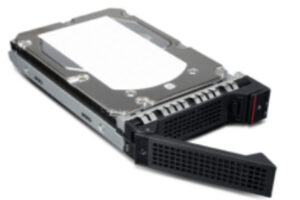


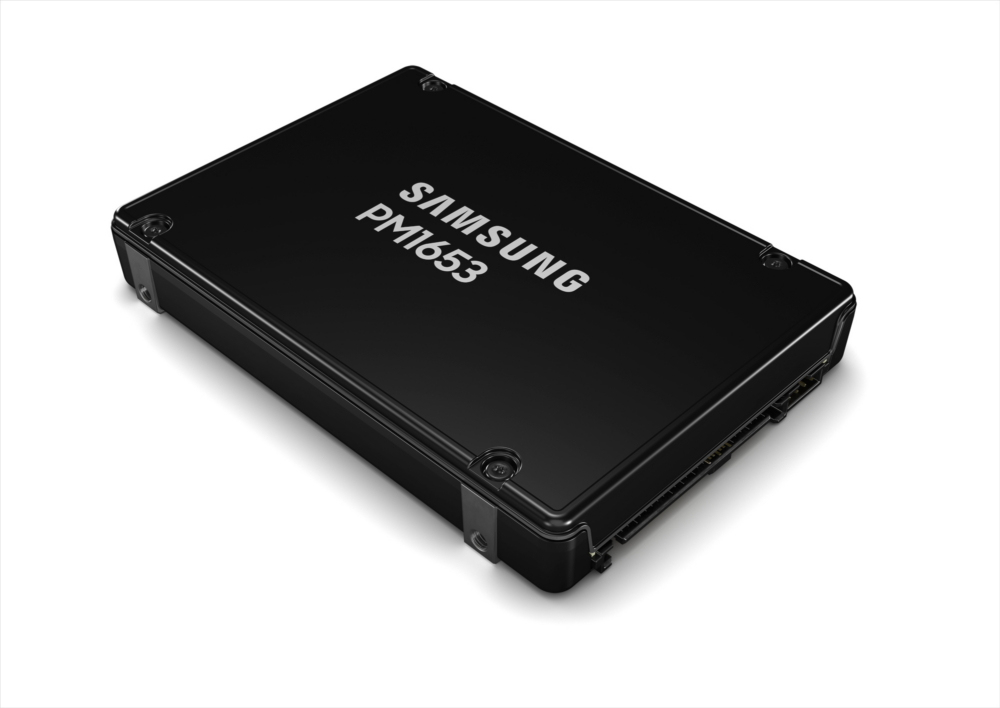
In the ever-evolving landscape of enterprise storage, organizations face the challenge of managing increasing data volumes while ensuring high performance and reliability. The Samsung PM1653 15 TB SAS V-NAND SSD addresses these challenges by providing a robust solution designed for heavy workloads and critical applications.
Equipped with a 24G SAS interface and a dual-port design, the PM1653 enhances throughput and stability, making it a suitable choice for enterprises that require dependable and efficient data storage solutions. Its advanced architecture allows businesses to keep pace with demanding data requirements while optimizing total cost of ownership (TCO).
Pros
- High-performance capabilities with 24G SAS support
- Dual-port design for enhanced reliability
- Utilizes sixth-generation 128-layer V-NAND technology
- Significantly larger capacity compared to previous models
- Improved random read/write speeds for better data handling
Cons
- Higher price point compared to consumer SSDs
- May require specific server configurations to fully utilize features
- Larger physical size may not fit all server environments
Who It’s For
Ideal for enterprise environments that manage large datasets and require high-speed access. Suitable for data centers, cloud service providers, and businesses with mission-critical applications.
How We Evaluated
To assess the Samsung PM1653, we conducted performance benchmarks focusing on throughput, random read/write speeds, and reliability under load. Comparisons were made against previous generation SSDs and competitor models in the same capacity range to evaluate improvements in speed and efficiency.
We also considered real-world use cases, analyzing how the SSD performs in typical enterprise scenarios, including database management and virtualization workloads. Feedback from IT professionals who have deployed similar solutions was incorporated to gauge reliability and ease of integration.
Affiliate Disclosure: This article contains affiliate links. When you purchase through links on our site, we may earn a commission at no additional cost to you. Our editorial team independently selects products based on research and testing. We only recommend products we genuinely believe in.