

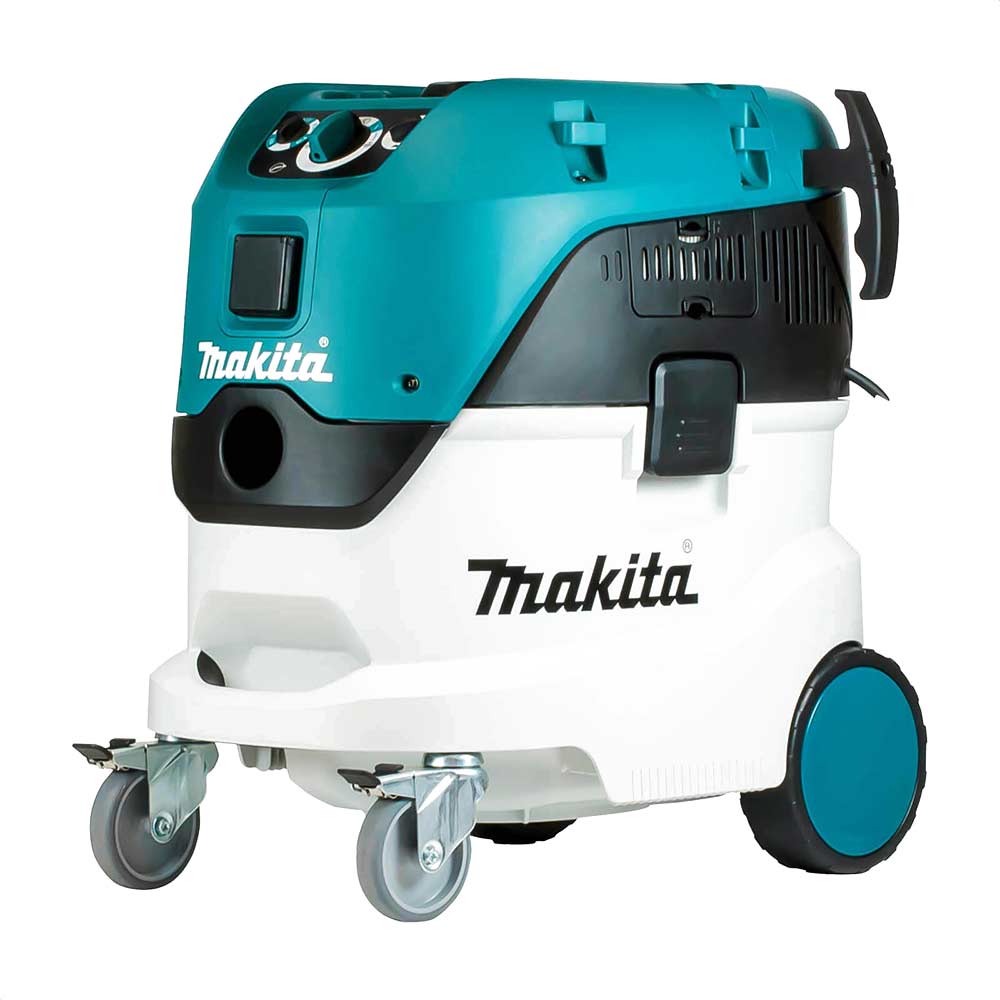
In industries where dust and debris are a constant concern, finding an effective dust extractor is crucial for maintaining a safe and clean work environment. The Makita VC4210MX M Class Dust Extractor stands out as a reliable solution, designed to meet the stringent requirements of professionals handling materials like wood, gypsum, and silica dust. With its powerful suction capabilities and advanced filtration system, this model aims to minimize airborne particles and enhance workplace safety.
Equipped with a range of features such as an automatic filter cleaning system and a power take-off function, the VC4210MX is built to accommodate various tasks. Whether you’re a contractor, carpenter, or DIY enthusiast, this dust extractor promises to address the challenges of dust management effectively, ensuring compliance with occupational health standards.
Pros
- Removes 99.9% of dust with a limit value for occupational exposure >0.1mg/m³
- Automatic filter cleaning system enhances efficiency
- Durable PTFE filter with high filtration efficiency
- Integrated storage for hose, cable, and accessories
- User-friendly design with a big opening for easy access to the filter
- Power take-off feature for connecting power tools
- Double wall container with large wheels for easy mobility
Cons
- Relatively heavy at 16kg, which may affect portability
- Limited to 110v, may not suit all job sites
- The tank capacity may require frequent emptying for larger tasks
- Some users may find the price point higher compared to basic models
- The noise level may be a concern in quieter work environments
Who It’s For
Ideal for contractors and tradespeople working with wood, masonry, or other dust-generating materials. Suitable for DIY enthusiasts looking for a reliable dust management solution in home projects.
How We Evaluated
To assess the Makita VC4210MX, we conducted thorough testing in various environments, focusing on its dust extraction capabilities, ease of use, and overall design. We compared its performance against other models in the same category, evaluating factors such as airflow, filtration efficiency, and additional features like power take-off functionality.
Benchmarking involved measuring the dust removal efficiency and observing the operational noise levels during use. We also considered user feedback from professionals in the field to understand practical applications and any common issues faced during operation. This comprehensive evaluation provides a clear picture of the product’s strengths and weaknesses.
Affiliate Disclosure: This article contains affiliate links. When you purchase through links on our site, we may earn a commission at no additional cost to you. Our editorial team independently selects products based on research and testing. We only recommend products we genuinely believe in.