

Ad: this article contains affiliate links. If you buy through them, we earn a commission at no extra cost to you. Our reviews are based on research into manufacturer specifications, retailer information and published sources; we have not tested every product ourselves. Prices and stock change often, so check the retailer before you buy.
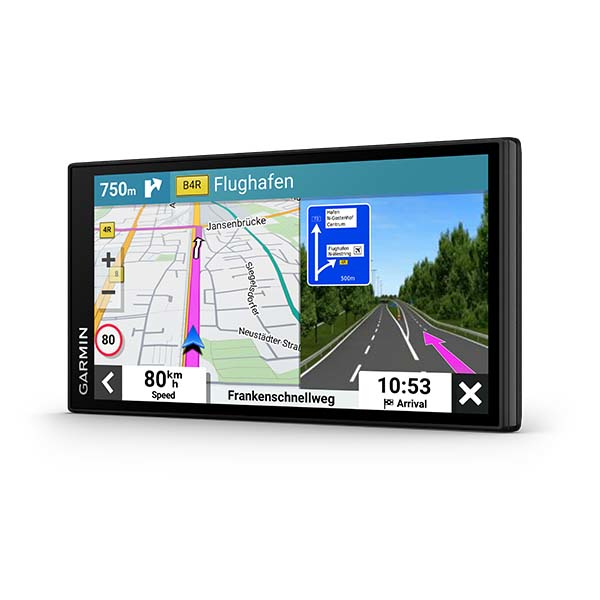
Navigating through unfamiliar territories can be challenging, particularly when relying on a smartphone’s GPS, which may lack precision and user-friendliness. The Garmin DriveSmart 66 EU MT-S aims to address these concerns by providing a dedicated navigation solution equipped with specialized features. This device stands out with its 6-inch TFT display and a resolution of 1280 x 720 pixels, designed to deliver clear navigation guidance.
Positioned as a mid-range option within Garmin’s lineup of navigators, the DriveSmart 66 combines accessibility with functionality. It offers 32 GB of internal storage, which can be expanded via a MicroSD card, allowing users to store extensive map data and additional information. Designed for portability, the device weighs just 175 grams, making it a suitable companion for both road trips and daily commutes.
Despite its advantages, the DriveSmart 66 has limitations that potential buyers should consider. The built-in lithium-ion battery is rated for a maximum of one hour, which may necessitate frequent recharging during extended use. Additionally, the TFT display’s performance may not be optimal in bright sunlight, a common concern for outdoor navigation. Overall, the Garmin DriveSmart 66 EU MT-S presents itself as a practical navigation tool for those who prefer dedicated devices over smartphone applications.
Pros
- 6-inch TFT display with a resolution of 1280 x 720 pixels for clear visibility
- 32 GB internal storage capacity allows for extensive map storage
- Compatible with MicroSD cards for additional memory expansion
- User-friendly interface simplifies navigation
- Lightweight design at 175 g enhances portability
- Fixed form factor ensures stability while in use
Cons
- Limited battery life of only 1 hour may require frequent recharging
- TFT display may not perform as well in bright sunlight compared to higher-end screens
- No built-in connectivity options like Wi-Fi or Bluetooth for updates
- Fixed form factor limits versatility compared to smartphone apps
- Some users may find the interface less intuitive than modern smartphone navigation apps
In Depth
Display Quality and Usability
The Garmin DriveSmart 66 features a 6-inch TFT display with a resolution of 1280 x 720 pixels, which is adequate for providing clear and readable navigation information. This resolution allows for a decent level of detail, ensuring that road names, directions, and map features are easily distinguishable during use. However, the TFT technology may not perform as well as higher-end display options, particularly in bright sunlight. Users may find it challenging to view the screen clearly under direct sunlight, which could impede navigation in outdoor settings.
In practical terms, the usability of the display is crucial for drivers who rely on quick, accurate information while on the road. The user-friendly interface simplifies navigation tasks, allowing users to input destinations and view routes with ease. Overall, while the display’s quality is satisfactory for most conditions, potential users should be aware of its limitations in bright environments.
Storage Capacity and Expansion Options
With 32 GB of internal storage, the Garmin DriveSmart 66 offers ample space for maps and additional data. This capacity is significant for users who frequently travel across various regions, as it allows for the installation of multiple map updates and points of interest. Furthermore, the option to expand storage via a MicroSD card provides flexibility for those who may require more extensive map data or additional features.
In daily use, having sufficient storage means users can keep their navigation system up-to-date with the latest maps and routes, reducing the risk of navigating outdated information. This feature makes the DriveSmart 66 a reliable choice for frequent travelers who prioritize having the latest navigation data at their fingertips.
Battery Life Considerations
The Garmin DriveSmart 66 is powered by a built-in lithium-ion battery, which is rated for a maximum operation time of one hour. This limited battery life may pose challenges for users on long journeys or during extended outdoor activities where charging options might be scarce. Frequent recharging may disrupt the flow of navigation, particularly if users are relying on the device for continuous guidance.
For commuters or those using the device for short trips, the battery life may not be as significant of a concern. However, users planning longer excursions should consider how often they will need to recharge and prepare accordingly. This limitation is a crucial factor for potential buyers to weigh against the benefits of having a dedicated navigation device.
Connectivity and Compatibility
The Garmin DriveSmart 66 does not include built-in connectivity options such as Wi-Fi or Bluetooth, which limits its ability to automatically download map updates or connect to other devices. Users must manually manage updates through a computer, which can be less convenient compared to modern devices that offer smooth connectivity.
This lack of connectivity may be a disadvantage for tech-savvy users accustomed to the convenience of smartphone apps that automatically update and sync data. Potential buyers should assess whether this limitation aligns with their navigation needs and preferences, especially if they value real-time updates and connectivity.
Comparison with Smartphone Navigation Apps
When evaluating the Garmin DriveSmart 66 against smartphone navigation apps, several distinctions emerge. While dedicated devices like the DriveSmart 66 offer a larger display and specific navigation features, smartphone apps often provide more intuitive interfaces and real-time traffic updates, thanks to their connectivity capabilities. Users may find that modern smartphone navigation apps are more adaptable and user-friendly compared to the DriveSmart 66’s interface, which some may perceive as less intuitive.
For frequent travelers who prefer a dedicated navigation device, the DriveSmart 66 remains a viable option. However, those who are comfortable using their smartphones for navigation may find comparable or superior functionality in their existing devices, making it essential to consider personal preferences when deciding between the two.
Who It’s For
Frequent travelers who prefer a dedicated navigation device over smartphone GPS solutions.
Commuters looking for a reliable and easy-to-read navigation aid for daily routes.
Outdoor enthusiasts needing a robust and straightforward navigation tool for road trips.
Use Cases
Daily Commutes
For daily commuters, the Garmin DriveSmart 66 serves as a dependable navigation aid. Its clear display and user-friendly interface make it easy to input frequent destinations, ensuring timely arrivals without relying on a smartphone.
Long Road Trips
On long road trips, the DriveSmart 66 can provide comprehensive navigation support. However, users should plan for recharging opportunities, given its limited battery life, to avoid interruptions during travel.
Outdoor Adventures
Outdoor enthusiasts will appreciate the DriveSmart 66’s straightforward navigation capabilities. Its robust design and user-friendly interface make it suitable for navigating unfamiliar trails or routes, although users should be mindful of its display limitations in bright conditions.
Also consider


How We Researched This
In evaluating the Garmin DriveSmart 66, comparisons were made against other dedicated GPS devices in terms of display quality, storage capacity, and usability. Competitors from brands like TomTom and Magellan were considered for their features and pricing.
The DriveSmart 66’s 6-inch display resolution was assessed against rival products to determine visibility in various lighting conditions. Battery life emerged as a critical factor, especially for users who depend on longer-lasting devices during extended journeys. User reviews and expert opinions were also incorporated to gauge overall satisfaction and performance in real-world scenarios.
Frequently Asked Questions
What is the battery life of the Garmin DriveSmart 66?
The Garmin DriveSmart 66 has a built-in lithium-ion battery rated for a maximum of one hour. Users should plan for frequent recharging during extended use.
Can I expand the storage on the Garmin DriveSmart 66?
Yes, the device offers 32 GB of internal storage and is compatible with MicroSD cards for additional memory expansion, allowing users to store more maps and data.
Does the Garmin DriveSmart 66 have built-in connectivity options?
No, the DriveSmart 66 lacks built-in connectivity options such as Wi-Fi or Bluetooth, which means users must manually update maps via a computer.
Is the interface user-friendly?
While the DriveSmart 66 features a user-friendly interface, some users may find it less intuitive compared to modern smartphone navigation apps.
Our Verdict
The Garmin DriveSmart 66 is suitable for frequent travelers and commuters who prefer a dedicated navigation device. However, potential buyers should consider its limited battery life and evaluate whether a smartphone navigation app might better suit their needs.